
Disaster Recovery as a Service (DRaaS): Pricing and Provider Comparison 2026
Explore DRaaS pricing in 2026, compare leading disaster recovery providers, and evaluate costs, recovery time objectives (RTO), recovery point objectives (RPO), and cloud-based solutions to protect business continuity.
15
Oct
Disaster Recovery as a Service (DRaaS): Pricing and Provider Comparison 2026
Published 15 Oct 2026 Updated 15 Oct 2026 Written and reviewed by Anshul Goyal
Table of Contents
Disaster Recovery as a Service (DRaaS) is beneficial for companies when there are disasters, attacks, machine failures, or interruptions of local cloud services, as they enable companies to retrieve applications, servers, and data without requiring them to run a replicated facility.
The service ranges in costs from a fairly affordable pay-per-use service to a tenable managed services price. The overall price depends on various factors, such as the number of protected servers, amount of storage, replication frequency, recovery infrastructure and RTO and RPO requirements, as well as the revenue of the organisation.
The leading services in this field are AWS Elastic Disaster Recovery, Azure Site Recovery, Google Cloud Backup and Disaster Recovery, as well as verified organisations offering the service through Veeam and Zerto technologies.
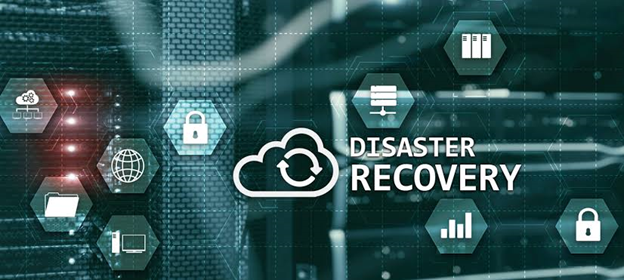
DRaaS usually involves payments for protected workloads, replicated storage, data transmission, and recovery platforms. AWS DRS charges $0.028 for each replicating source server for each hour of use, where Azure determines prices based on the number of protected instances. Google uses a system where storage consumption and management charges are incurred. Various types of managed DRaaS solutions that are based on Veeam or Zerto are priced according to service providers or custom contracts.
TL;DR
-
1. AWS is attractive for organisations planning recovery into AWS.
-
2. Azure Site Recovery fits Microsoft and Azure-heavy environments.
-
3. Google Cloud Backup and DR uses workload and storage-based consumption pricing.
-
4. Veeam offers flexibility through its large service-provider ecosystem.
-
5. Zerto focuses strongly on continuous replication and aggressive recovery objectives.
-
6. Compare total recovery cost, not only the advertised DRaaS license fee.
-
7. Define RTO and RPO before choosing a provider.
What Is Disaster Recovery as a Service?
DRaaS stands for Disaster Recovery as a Service, which is a disaster recovery option that provides replication and workload protection and allows for the recovery of workloads in the event of unavailability of the primary infrastructure.
Compared to traditional disaster recovery solutions, the customer does not need to continuously have a fully functional secondary data centre.
The key metrics for determining the architecture include:
-
1. RTO – Recovery Time Objective, which means the maximum time for a workload to be inactive.
-
2. RPO – Recovery Point Objective, which means the acceptable amount of time for data loss.
According to Google Cloud, RTO is defined as downtime, and RPO is defined as the age of data that is able to be recovered.
How Does DRaaS Pricing Work?
DRaaS pricing is usually a combination of software/service fees and the cloud resources required to maintain and activate recovery.
1. Protected Workloads
Service providers typically charge by physical machine, virtual machine, protected instance, database, or workload.
AWS Elastic Disaster Recovery's price for its service is $0.028 per source server per hour, which is about $20.44 per month assuming that the server is being continuously replicated and that no other costs are incurred.
2. Replication and Storage
Replica disks, snapshots, backup vaults, and retention policies incur additional costs.
In the example given by AWS for 100 servers, it is shown that the price for its DR service is only one of the costs on the bill. There are additional costs associated with EBS staging disks, snapshots, and replication compute.
3. Recovery Compute
In most cloud DR service implementations, standby computing is minimised, and larger resources are only activated for testing purposes and in the event of a disaster.
This system reduces the costs of operating, but there is still an additional cost during recovery. For example, AWS charges full recovery compute once recovery instances are activated.
4. Network and Data Transfer
Cross-region replication and outbound data transfer can materially affect the bill.
Microsoft specifically identifies storage, storage transactions, outbound transfer, snapshots, and failover compute as additional Azure Site Recovery cost components.
5. Managed Services
A fully managed DRaaS contract can also include monitoring, testing, reporting, recovery planning, support, and assistance during an outage.
Veeam notes that its service providers can price DRaaS per machine, per TB, as a fixed environment fee, per recovery test, or through combinations of these models.
DRaaS Provider Comparison 2026
The best provider depends more on workload location, recovery targets, internal skills, and management requirements than on the lowest headline price.
|
Provider |
Pricing Model |
Best Fit |
Key Consideration |
|
AWS Elastic Disaster Recovery |
$0.028/source server/hour + AWS resources |
AWS and hybrid workloads |
Infrastructure charges are separate |
|
Azure Site Recovery |
Per protected instance + Azure resources |
Microsoft/Azure environments |
Storage, egress and failover compute add cost |
|
Google Cloud Backup and DR |
Consumption-based management, storage and transfer |
Google Cloud/data protection environments |
Pricing varies significantly by workload |
|
Veeam-powered DRaaS |
Provider-defined/consumption-based |
Hybrid and VMware environments |
Price and SLA vary by service provider |
|
Zerto |
Custom/partner pricing |
Enterprise workloads with aggressive RPO/RTO |
Quote required for accurate pricing |
Pricing and capabilities reflect official provider information available in August 2026.
AWS Elastic Disaster Recovery
AWS DRS provides very simple pricing for the core service and is structured to keep replication costs low until recovery takes place.
According to AWS, its service charge is $0.028 per replicating server on an hourly basis. Its documentation also defines continuous block-level replication with a crash-consistent RPO in the order of seconds and a typical RTO of around 5-20 minutes, though actual recovery time varies with the environment.
Microsoft Azure Site Recovery
Organisations that are already utilising Azure virtual machines (VMs), Hyper-V, VMware, or Microsoft-based infrastructure may find Azure Site Recovery to be an excellent choice.
The latest pricing information available in the USA indicates that the cost of recovery to Azure is $25 for each secured instance on a monthly basis, while the process of recovering to the sites owned by customers costs $16 each month after the first month of usage.
Azure can support continuous replication of both Azure and VMware virtual machines (VMs), test failovers, recovery plans, failback and application-consistent recovery points.
Google Cloud Backup and DR
In contrast to the universal pricing model for disaster recovery services that is utilised by other providers, Google Cloud adopts a consumption-based pricing strategy.
Its charges can comprise costs related to backup storage and administration, inter-region transfers, and moving data across multiple regions. Charges may also differ depending on the type of workload that is subject to protection.
This approach seems effective for businesses utilising Google Cloud services already, but estimating the expenses is challenging since it requires determining factors such as the amount of workload, the storage period of that workload, and the recovery architecture used.
Veeam-Powered DRaaS
Veeam is especially helpful when a company wants to acquire managed disaster recovery through a dedicated cloud or service provider.
There are various commercial model options that Veeam supports, including per-machine, storage-consumption, fixed-price, testing, and reserved-resource models.
While this offers great flexibility, any client should be sure to evaluate SLAs while efficiently managing its own disaster-recovery resources.
Zerto
Zerto is positioned toward organisations requiring continuous data protection and fast application-level recovery.
Zerto describes journal-based continuous protection with recovery points separated by roughly 5–15 seconds and positions its platform around RPOs of seconds and RTOs of minutes. These are vendor-stated capabilities and actual outcomes depend on architecture and workload conditions.
Pricing generally requires a vendor or partner quote.
How to Choose a DRaaS Provider
Choose DRaaS by first establishing your business recovery needs, then examining vendors.
-
1. Conduct a business impact assessment to identify which applications would cause your business the greatest level of operational or financial detriment in the event of an outage.
-
2. Define RTO and RPO objectives. Some critical systems may require the high cost of continuous replication.
-
3. Classify workload types. Identify those that are mission-critical, important, and less significant.
-
4. Total up costs. Consider license fees, storage costs, snapshots, networking fees, testing, support, and failover computing.
-
5. Conduct a recovery test. A disaster recovery plan has worth only if it can recover.
-
6. Ensure you understand service-level agreements (SLAs). You will need to know what the vendor handles and what you are responsible for.
NIST guidance for contingency planning highlights the importance of business impact analysis, recovery procedures, testing, training, and constant review of the plan.
Key Benefits of DRaaS
DRaaS minimises the logistical and operational demands of managing disaster recovery in-house.
-
1. Reduced reliance on a purpose-built backup facility
-
2. Quicker recovery via automation
-
3. Physical segregation of recovery sites
-
4. Simplified DR testing
-
5. Flexible computing and storage capacity
-
6. Ability to leverage expert DR services
-
7. Enhanced ransomware and outage recovery assistance
Limitations of DRaaS
DRaaS does not eliminate disaster recovery risk or responsibility.
Common limitations include:
-
1. Ongoing storage and replication costs
-
2. Cloud data-transfer charges
-
3. Dependence on provider infrastructure
-
4. Application compatibility issues
-
5. Recovery complexity for multi-tier applications
-
6. Potential vendor lock-in
-
7. Costs for reserved recovery capacity
Common DRaaS Mistakes
The biggest mistake is purchasing DR technology without designing a recovery strategy.
Avoid:
-
1. Choosing every workload for the same RTO/RPO
-
2. Comparing only license prices
-
3. Ignoring network bandwidth
-
4. Never performing test failovers
-
5. Forgetting application dependencies
-
6. Assuming backup and disaster recovery are identical
-
7. Failing to document recovery ownership
Best Practices and Expert Tips
A phased disaster recovery plan typically offers better value for money than imposing top-quality protection across the board.
For key applications, opt for nearly continuous replication, while cost-effective recovery methods are better suited to other less critical workloads; in cases of systems that can tolerate longer downtime, standard backup can be employed.
Microsoft endorses regular DR drills and recommends at least quarterly or semi-annual failover tests for live Site Recovery deployments.
Real-World Example
Suppose you have a company that has 50 servers, with just 10 being critical for the business.
The company could invest in:
-
Tier 1: 10 servers with extremely low RPO/RTO
-
Tier 2: 20 servers with moderate recovery expectations
-
Tier 3: 20 servers with backup-based recovery.
This helps the company save costs while providing protection based on business needs.
Mini Case Study: Comparing Headline and Real Cost
A company selecting AWS DRS should not calculate cost as 50 × $20.44 and assume its DR bill is roughly $1,022 monthly.
That figure represents only the AWS DRS service charge. Replication servers, EBS staging volumes, snapshots, network usage, drills, and recovery compute can increase the total substantially. AWS's published 100-server pricing example demonstrates this difference directly.
People Also Ask: DRaaS FAQs
1. How much does DRaaS cost?
The costs of DRaaS will vary based on certain parameters, including the number of workloads to be protected, the speed of service recovery, and the frequency of backups.
2. Is DRaaS cheaper than a secondary data centre?
DR does not guarantee recovery times because downtime can vary depending on the workload and recovery needs.
3. What is the difference between backup and DRaaS?
Backup is about restoring information, while DRaaS is about restoring business service, including underlying infrastructure and orchestration of restoration efforts.
4. What is a good RPO for DRaaS?
There is no clear minimum or maximum RTO target. It can be a few seconds for critical transactional systems and several hours for systems of minor importance.
5. What is a good RTO?
RTO reflects not the speed of recovery but the maximum acceptable downtime for the business.
6. Does DRaaS protect against ransomware?
DRaaS can support ransomware recovery, especially when combined with immutable backups, isolated recovery environments, clean restore points, and tested incident procedures. Google and Zerto both position their recovery capabilities for cyber-resilience scenarios.
7. Which DRaaS provider is best?
AWS often fits AWS-oriented infrastructure, Azure fits Microsoft environments, while Veeam and Zerto can be strong choices for hybrid or specialised enterprise recovery.
8. How often should disaster recovery be tested?
Testing frequency should reflect business risk. For Azure Site Recovery production environments, Microsoft recommends quarterly or biannual DR drills.
DRaaS should be evaluated as a business-resilience service, not simply another cloud subscription. The cheapest advertised rate can become expensive once storage, networking, replication, recovery capacity, and management are included. Define RTO and RPO, tier workloads by importance, run realistic recovery tests, and compare total annual cost before signing a contract.
Conclusion
A good DRaaS vendor should find the right blend between speed of recovery, data security, management effort, and cost. Cloud providers like AWS and Azure have appealing cloud-based options for disaster recovery, whereas Google has usage-based backup and recovery capabilities, and companies like Veeam and Zerto offer appealing solutions for hybrid and enterprise scenarios. Instead of asking, "Who is the cheapest DRaaS vendor?" you should ask, "Who can ensure that our most mission-critical applications are recovered in accordance with our RTO and RPO requirements - and how much will that cost?"
Do you need assistance in choosing the right DRaaS option? Start off by assessing workloads along with business impact, creating recovery goals and comparing architectures presented by AWS, Azure, Google Cloud, Zerto, or Veeam, based on total expenses involved, durability and operational factors instead of merely the price.
Anshul Goyal
Group BDM at B M Infotrade | 11+ years Experience | Business Consultancy | Providing solutions in Cyber Security, Data Analytics, Cloud Computing, Digitization, Data and AI | IT Sales Leader