What the service can cover
- EDR, endpoint security and next-generation firewall controls
- SIEM and SOAR integration
- Zero trust security and data loss prevention
- Mobile, identity and advanced threat protection
BM Infotrade supplies Next-Gen Security Solutions geared towards helping organizations improve their security posture while ensuring that they always have access to critical resources.

Organizations need to have the best Next-Gen Security Solutions that adapt to the advances in cybersecurity features. BM Infotrade offers services that enhance smooth access to your digital assets while integrating cybersecurity features. Our services revolve around integrated systems like Secure Access Service Edge (SASE) which is a modern approach to network security and access control. Regardless of the industry, every organization is prone to heterogeneous threats and requires multiple layers of defence such as cloud security, endpoint protection, and real-time monitoring.
The use of antivirus solutions is still critical when it comes to protecting endpoints against malware, viruses, and other cyber threats. Robust antivirus tools provided by BM Infotrade deliver real-time protection through 24/7 scanning of known and emerging threats. With automatic updates, the systems stay current with new definitions, and thorough scanning routines guarantee the devices’ safety. Our antivirus tools are built to protect the frontline of your IT infrastructure—your endpoints.

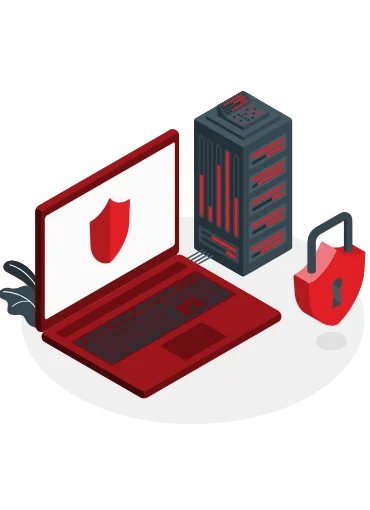
Database activities monitoring (DAM) is one of the measures we put in place here at BM Infotrade for the protection of sensitive information in databases. We deploy DAM solutions that monitor and analyze database activities in real-time by flagging attempts at unauthorized access and other anomalies. Our provided solutions have additional monitoring provisions, including performance anomaly detection and access control so that only designated individuals can work with the data. This approach covers internal as well as external threats to the infrastructure data security.
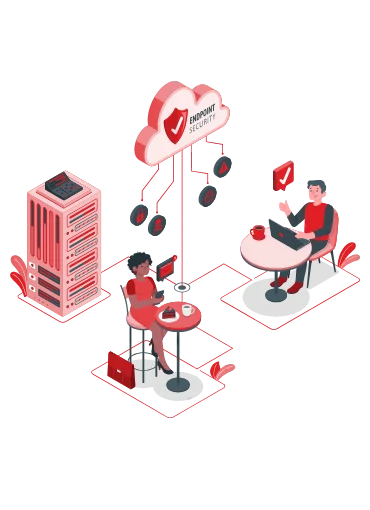
EDR’s technology enables Endpoint Detection and Response solutions to enhance protection services even further. BM Infotrade provides proactive services like continuous monitoring, threat hunting, and incident response to mitigate damages from harmful attacks. The EDR platform facilitates the tracking of activities in real-time, applies advanced threat detection capabilities, and uses defined incident response workflows to mitigate security threats quickly and effectively. This level of defence is critical, especially in today’s rapidly evolving cyber threat environment.

With work-from-anywhere models now standard, Mobile Device Management (MDM) is essential for securing smartphones, tablets, and remote devices. BM Infotrade's MDM services enable organizations to enforce security policies, encrypt sensitive data, and remotely manage employee devices. These solutions ensure safe access to company resources without compromising productivity or information security—enabling a truly mobile yet secure enterprise.
BM Infotrade uses SIEM (Security Information and Event Management) systems to collect, analyze, and correlate data from multiple sources. This provides organizations with real-time visibility into threats, enabling immediate action. Our SIEM solutions incorporate AI-driven analytics to prioritize risk levels and streamline incident response. With centralized dashboards and continuous monitoring, SIEM becomes the nerve center of your cybersecurity strategy, allowing for quicker decisions and efficient threat handling.

SOAR platforms combine automation, integration, and orchestration to simplify and speed up your security operations. BM Infotrade’s SOAR services enable businesses to coordinate various security tools and automate repetitive tasks—drastically reducing response times. With features like tool orchestration, intelligent incident automation, and flexible manual response options, our SOAR framework boosts your security operations center’s (SOC) efficiency and effectiveness.
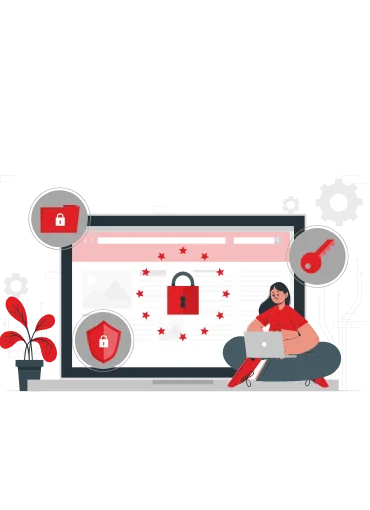
Data Loss Prevention (DLP) tools allow companies to protect sensitive information, regardless of the risks of leaks, intentional or unintentional. BM Infotrade’s DLP framework proactively aids in ensuring data privacy through real-time monitoring, incident response, and defined policy enforcement. Our DLP measures track data movement throughout the environment and prevent unauthorized transfers, protecting sensitive business and intellectual property information 24/7.

We provides the next generation of security solutions to protect endpoints, databases, cloud systems, and user devices from modern risks. Today's cyber threats require a proactive and comprehensive security strategy. Our portfolio includes every critical cybersecurity tool, from Antivirus and DAM to SIEM, SOAR, and DLP. All are centrally managed under a single cohesive framework and delivered as SASE, which enables better total organizational protection Within AND Beyond the Perimeter. Contact BM Infotrade today to deploy a comprehensive vison proof security architecture that fits your business.
Next-Generation Enterprise Security Solutions help organisations consolidating prevention, detection, response and data-protection controls. The service can include EDR, endpoint security and next-generation firewall controls, SIEM and SOAR integration, zero trust security and data loss prevention and mobile, identity and advanced threat protection and is designed to deliver coordinated security controls that improve visibility and reduce manual gaps between prevention and response.
BM Infotrade follows a requirement-led process: assess control gaps, define architecture and integrations, pilot policies, deploy in phases, tune alerts and measure coverage. Architecture, timelines and commercials depend on documented workload, user, risk, location and compliance requirements. Organisations should compare providers on coverage, interoperability, telemetry, policy control, automation safeguards, reporting and operational ownership rather than a generic product bundle.
Assess control gaps, define architecture and integrations, pilot policies, deploy in phases, tune alerts and measure coverage.
Coverage, interoperability, telemetry, policy control, automation safeguards, reporting and operational ownership.
Next-Generation Enterprise Security Solutions can include EDR, endpoint security and next-generation firewall controls, SIEM and SOAR integration, zero trust security and data loss prevention and mobile, identity and advanced threat protection. The final scope should follow the organisation’s workloads, risks, users, compliance obligations and operating model rather than a fixed product bundle.
BM Infotrade uses a staged approach: assess control gaps, define architecture and integrations, pilot policies, deploy in phases, tune alerts and measure coverage. Scope, responsibilities, assumptions and acceptance criteria should be agreed before implementation.
Evaluate providers on coverage, interoperability, telemetry, policy control, automation safeguards, reporting and operational ownership. Ask for a requirement-specific architecture, implementation plan, named responsibilities and a support model before selecting a solution.
Standards and product documentation: NIST Cybersecurity Framework 2.0 CERT-In directions and advisories Digital Personal Data Protection Act, 2023