What the service can cover
- Chatbot and virtual-assistant design
- Microsoft Teams and business-system integration
- Conversation and workflow automation
- Analytics, handoff and continual improvement
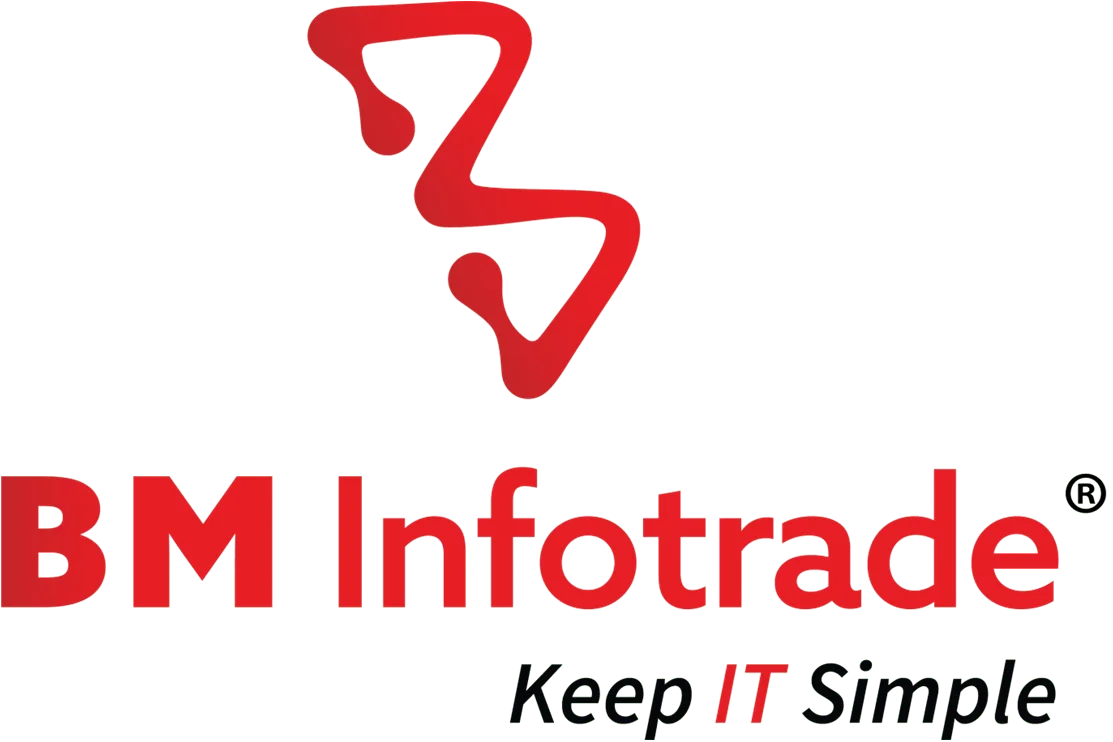
Virtual bots and chatbots are crucial for better customer engagement and smoother business processes during the digital transformation era.
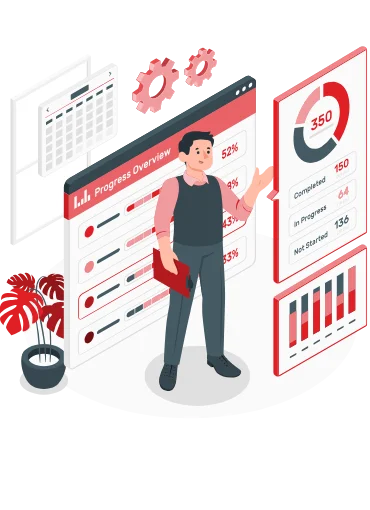
With the growth of technology, Virtual Bots and Chatbots have become the backbone of customer interaction and business automation. BM Infotrade provides sophisticated Virtual Bots Solutions as part of our Digitization solutions . These Bots utilize Artificial Intelligence (AI) to improve customer engagement, automate important business activities and optimize workflows. Our Virtual Bots and Chatbots are built to suit the needs of contemporary businesses providing bot to human as well as human to bot communications with high operational efficiency.
A virtual bot is an AI-powered tool that conversationally communicates with users, executes automated tasks and fetches information. These bots can be integrated across multiple platforms and perform a variety of customer service, data retrieval, and workflow automation functions. The deployment of Virtual Bot Solutions enables businesses to improve their operational efficiency as well as the speed and quality of communication with customers and staff.
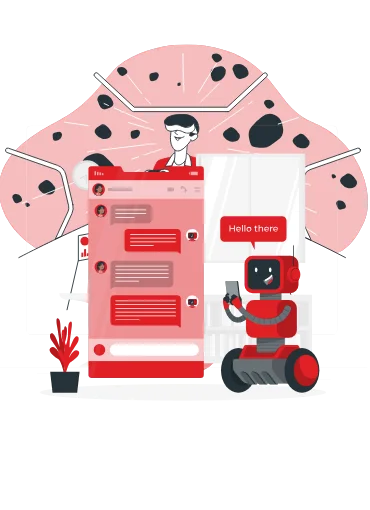
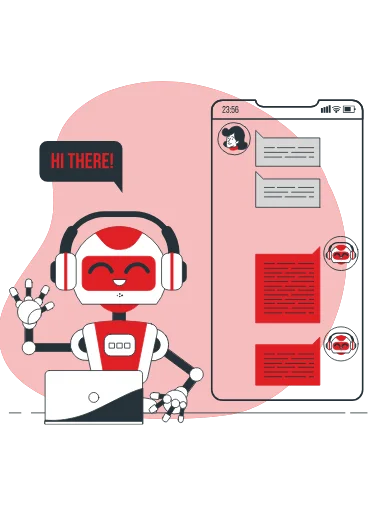
Using AI-powered Bots like Chatbots and Virtual Bots enhances customer service, sales, and marketing through user engagement. With BM Infotrade’s Virtual Bot Solutions, immediate responses to inquiries, user guidance through procedures, and overall user experience improvement can be automated. From answering the most asked questions to transaction assistance and recommendation services, our Virtual Bots and Chatbots offer instant customer service that increases customer engagement and satisfaction.
BM Infotrade’s Virtual Bot Solutions can streamline customer service operations as well as other business workflows. These bots can assist customers around the clock, which improves customer satisfaction and support. Furthermore, they boost productivity by carrying out autonomous processes, which helps human workers concentrate on more important duties. Reduced operational cost is another benefit since automation decreases the need for manual interaction. Bots and Chatbots also simplify scaling, as they effortlessly manage growing amounts of customer requests without employing additional staff. Finally, user interactions are examined to collect and analyse data which provides useful business information for service improvement and decision making.
BM Infotrade’s Virtual Bot , integrated with Microsoft Teams , boosts teamwork and productivity in the workplace by automating processes and providing instantaneous information. The Virtual Bot can be deployed on Microsoft Teams so that a business can enhance communication, streamline task allocation, and optimise internal processes. With the help of AI, employees can access information instantly, receive automated responses, and boost their productivity. Automated processes reduce manual work within the organisation so that attention can be devoted to more strategic activities. Improved collaboration ensures better communication between workers in teams, and the customised responses make sure the bot only provides answers that meet the organisation's specific needs.
BM Infotrade’s virtual bots are fitted with sophisticated features that improve usability and business processes. Our bots utilise NLU models to accurately process user inputs and engage in meaningful and contextually intelligent interactions. Using different NLU providers, businesses can incorporate multi-AI technologies which enhance industry chatbot responsiveness. Businesses can link their virtual bots and chatbots to various social media, websites, and messaging applications through third-party channel integrations, enabling greater accessibility and reach. With sophisticated conversational interfaces, users interact with the bot in a simple yet engaging manner. The conversation designer feature helps businesses fine-tune chatbot conversations to ensure efficient customer communication.
BM Infotrade is aware that each company has its own set of needs. Thus, we have tailored Virtual Bot Solutions that best cater to specific requirements. In particular, our branded interfaces let businesses design the bot to their specifications and for their branding purposes. Moreover, through personal workflows, organisations can construct automated procedures that are tailored to their processes, guaranteeing maximum effectiveness. The bot’s integration with existing systems makes sure that there is connectivity with the current IT framework, internal applications, extranet systems, and other software. Custom responses for users further boost engagement by permitting replies that are based on prior interactions and user preferences.
BM Infotrade’s Virtual Bot Solutions transforms businesses by improving customer communication, automating processes, and increasing productivity levels. We have the perfect solution whether an enterprise requires a customer support bot, a Virtual Bot for collaborating on Microsoft Teams, or a bespoke bot that fulfils specific business requirements. Contact BM Infotrade today and learn more about how our Virtual Bots and Chatbots can render your business more efficient, increase customer satisfaction, and accelerate your digital transformation efforts.

Virtual Bot and Chatbot Development Services help organisations automating repeatable conversations, requests and employee or customer support journeys. The service can include chatbot and virtual-assistant design, Microsoft Teams and business-system integration, conversation and workflow automation and analytics, handoff and continual improvement and is designed to deliver consistent automated assistance with defined escalation, security and human-handoff paths.
BM Infotrade follows a requirement-led process: identify high-volume intents, design conversations, connect approved data and systems, test, launch, monitor and refine. Architecture, timelines and commercials depend on documented workload, user, risk, location and compliance requirements. Organisations should compare providers on use-case volume, response accuracy, integration, privacy, fallback design, analytics and content ownership rather than a generic product bundle.
Identify high-volume intents, design conversations, connect approved data and systems, test, launch, monitor and refine.
Use-case volume, response accuracy, integration, privacy, fallback design, analytics and content ownership.
Virtual Bot and Chatbot Development Services can include chatbot and virtual-assistant design, Microsoft Teams and business-system integration, conversation and workflow automation and analytics, handoff and continual improvement. The final scope should follow the organisation’s workloads, risks, users, compliance obligations and operating model rather than a fixed product bundle.
BM Infotrade uses a staged approach: identify high-volume intents, design conversations, connect approved data and systems, test, launch, monitor and refine. Scope, responsibilities, assumptions and acceptance criteria should be agreed before implementation.
Evaluate providers on use-case volume, response accuracy, integration, privacy, fallback design, analytics and content ownership. Ask for a requirement-specific architecture, implementation plan, named responsibilities and a support model before selecting a solution.
Standards and product documentation: Microsoft Power Platform guidance Microsoft Power Platform adoption