
Zero Trust Security Implementation Services: Budget and Rollout Plan for 2026
Understand the budget, key costs, and step-by-step rollout plan for Zero Trust Security Implementation in 2026 to strengthen access control and reduce security risks.
24
Oct
Zero Trust Security Implementation Services: Budget and Rollout Plan for 2026
Published 24 Oct 2026 Updated 24 Oct 2026 Written and reviewed by Anshul Goyal
Table of Contents
- What Are Zero Trust Security Implementation Services?
- Why Is Zero Trust Important in 2026?
- How Much Does Zero Trust Implementation Cost?
- Where Should the Zero Trust Budget Go First?
- Zero Trust Rollout Plan: Step by Step
- Traditional Security vs Zero Trust Security
- Benefits of Zero Trust Security Implementation Services
- Zero Trust Implementation Best Practices
- Expert Tips for Reducing Zero Trust Implementation Costs
- FAQs
- Conclusion
The services for implementing Zero Trust Security will help organisations shift from reliance on assumptions when it comes to access to the process of constant authentication of users, devices, apps, and data. Usually, when it comes to rolling out Zero Trust, it starts with identity and access management, proceeds forward with the implementation of devices and apps, and then involves segmentation, data protection, monitoring, and automation.
Most companies are better off if, instead of trying to change their entire security stack at once, making a phased implementation plan that would be carried out for 6–12 months, picking the sections already purchased where possible, launching the most dangerous systems in the beginning and distributing spending based on business risk.
According to NIST's definition, Zero Trust operates on one clear principle: no user or device is implicitly trusted based solely on its location. The final implementation guideline SP 1800-35 that was published in June 2025, describes 19 different Zero Trust architectural models made with the help of 24 technology partners.
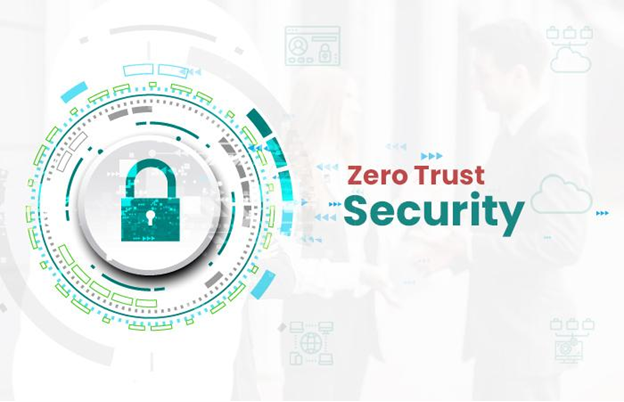
The services involved in Zero Trust Security Implementation may consist of security evaluation, identity modernisation, multi-factor authentication, privileged access management, endpoint security, zero trust network access, micro-segmentation, data protection, monitoring, and policy automation. Organisations must roll out those capabilities through phases and not aim for a full transition at once. Budget should be focused on identity, critical applications, endpoints, and visibility as a higher priority than advanced automation.
A successful Zero Trust implementation should:
-
1. Begin with an asset, identity, application, and risk assessment.
-
2. Strengthen IAM, MFA, SSO, and privileged access first.
-
3. Verify device health before granting application access.
-
4. Replace broad VPN access with Zero Trust Network Access where appropriate.
-
5. Segment critical workloads to reduce lateral movement.
-
6. Protect sensitive data using classification, encryption, and DLP.
-
7. Centralise security telemetry and automate policy decisions.
-
8. Roll out controls gradually over 6–12 months.
-
9. Measure risk reduction instead of simply counting deployed tools.
What Are Zero Trust Security Implementation Services?
Zero Trust Security Deployment Services help companies establish, launch, interconnect, and supervise safety measures based on constant authentication and minimum privilege access. Zero Trust means that the concept of cybersecurity states that a person, a device, or an application’s location inside an organization’s network does not result in automatic approval of access.
Contrarily, the components affecting the decision to grant access are:
1. User identity
2. Level of authentication
3. Device state
4. User location
5. Application classification
6. Data classification
7. User activity
8. Session danger
9. Information about the threat.
CISA’s Zero Trust Maturity Model divides the process into five pillars: identity, devices, networks, applications and workloads, and data.
Typical Zero Trust implementation services include:
-
1. Zero Trust maturity assessment
-
2. IAM and identity governance
-
3. Multi-factor authentication
-
4. Passwordless authentication
-
5. Privileged Access Management
-
6. Endpoint Detection and Response
-
7. Mobile Device Management
-
8. Zero Trust Network Access
-
9. SASE integration
-
10. Network and workload segmentation
-
11. Data classification
-
12. Data Loss Prevention
-
13. SIEM/SOC integration
-
14. Security automation
-
15. Policy design
-
16. Employee training
Why Is Zero Trust Important in 2026?
The importance of Zero Trust is increasing since attacks today do not only target the network perimeter but also address identities, vulnerable applications, third-party connections, cloud resources, and remote endpoints. The 2026 Data Breach Investigations Report by Verizon states that the exploitation of vulnerabilities became the leading entry point for security breaches at 31%, while third-party involvement accounted for 48% of breaches.
In terms of financial impact, this is also substantial. According to IBM's 2026 Cost of a Data Breach Report, the average global breach cost was valued at USD 4.99 million, whereas the average breach cost in India was ₹25.5 crore in 2026.
Although Zero Trust cannot put an end to cyberattacks, it can provide a huge help in dealing with compromised credentials, infected endpoints and unauthorised lateral movement.
How Much Does Zero Trust Implementation Cost?
Zero Trust implementation cost depends on user count, existing security licenses, application complexity, compliance requirements, cloud adoption, legacy systems, and current cybersecurity maturity. There is no universal Zero Trust price because Zero Trust is an architecture rather than a single product.
Illustrative Year-One Budget for a 1,000-User Organisation
|
Component |
Planning Budget |
|
Zero Trust assessment and architecture |
$15,000–$30,000 |
|
IAM, MFA, SSO and PAM |
$35,000–$70,000 |
|
Endpoint security and device management |
$25,000–$50,000 |
|
ZTNA, SASE and segmentation |
$35,000–$80,000 |
|
Data security and DLP |
$20,000–$50,000 |
|
SIEM integration and automation |
$20,000–$45,000 |
|
Testing, training and change management |
$10,000–$25,000 |
|
Illustrative Year-One Total |
$160,000–$350,000 |
Important: These are planning estimates, not market-standard prices or vendor quotations. Actual costs can be substantially lower or higher.
Organisations already paying for security suites from vendors such as Microsoft, Cisco, Palo Alto Networks, CrowdStrike, Okta, AWS, Google Cloud, or other providers may already own some required capabilities.
Where Should the Zero Trust Budget Go First?
Organisations should fund controls according to risk instead of distributing the cybersecurity budget equally across every Zero Trust pillar.
A practical allocation could look like:
|
Priority |
Approximate Share |
|
Identity and privileged access |
20–30% |
|
Endpoint and device security |
15–20% |
|
ZTNA/network controls |
15–25% |
|
Application and data protection |
15–25% |
|
Monitoring and automation |
10–15% |
|
Assessment, training and governance |
5–10% |
Identity normally deserves early investment because a stolen account can give attackers legitimate-looking access to several applications. However, organisations with internet-facing legacy systems may need vulnerability remediation and application protection at the same time.
Zero Trust Rollout Plan: Step by Step
The safest approach is a phased migration that protects high-risk resources first and expands controls after policies have been tested.
Phase 1: Discovery and Assessment — Days 0–30
Start by understanding what exists before purchasing new tools.
Identify:
1. Users and privileged accounts
2. Employees, contractors and partners
3. Managed and unmanaged devices
4. Business-critical applications
5. Cloud workloads
6. Sensitive databases
7. Existing security tools
8. High-risk access paths
Create a Zero Trust maturity score and identify the biggest gaps.
Phase 2: Identity First — Days 30–90
Secure identities before making large network changes.
Implement or strengthen:
1. MFA
2. SSO
3. Identity governance
4. Role-based access
5. Conditional access
6. Privileged Access Management
7. Joiner-mover-leaver processes
High-risk administrators should receive stricter controls than ordinary users.
Phase 3: Device Trust and ZTNA — Days 90–180
Access decisions should consider both user identity and device security posture.
Integrate:
1. EDR/XDR
2. MDM/UEM
3. Device certificates
4. Patch status
5. Endpoint compliance
6. ZTNA
For example, a valid employee password should not automatically allow access if the request originates from an unmanaged device with outdated security software.
Phase 4: Applications, Segmentation and Data — Days 180–270
Protect critical applications and restrict unnecessary communication between systems.
Introduce:
1. Application-level access policies
2. Microsegmentation
3. Workload identity
4. API authentication
5. Data classification
6. Encryption
7. DLP
8. Database access monitoring
This limits the attacker's ability to move laterally after compromising one account or machine.
Phase 5: Monitoring and Automation — Days 270–365
Zero Trust becomes more effective when access policies respond dynamically to changing risk.
Integrate identity, endpoint, cloud, application, and network telemetry into:
1. SIEM
2. SOAR
3. SOC workflows
4. UEBA
5. Threat intelligence
6. Automated access policies
For example, a high-risk login combined with an unhealthy device and unusual data access could automatically trigger step-up authentication or terminate the session.
Traditional Security vs Zero Trust Security
Traditional security relies heavily on network location, while Zero Trust focuses on resource-level, identity-aware access.
|
Area |
Traditional Approach |
Zero Trust Approach |
|
Trust |
Trust internal users |
Verify every request |
|
Authentication |
Login-based |
Continuous/contextual |
|
Network |
Perimeter-focused |
Resource-focused |
|
Access |
Broad permissions |
Least privilege |
|
Devices |
Limited verification |
Device posture checked |
|
Applications |
Network-based access |
Application-specific access |
|
Segmentation |
Large network zones |
Granular segmentation |
|
Monitoring |
Event-focused |
Continuous risk evaluation |
Benefits of Zero Trust Security Implementation Services
Zero Trust's biggest advantage is that it minimises unwanted access and curtails the damage caused by hacked accounts or devices.
Key advantages are as follows:
1. Lesser lateral movements
2. Easier control over power users
3. Higher security for distant access
4. Improved security in the cloud
5. Better access for contractors
6. Smaller attack surface
7. Better understanding of devices
8. Well-organised policies of access
9. More protection of confidential information
10. Better auditing and compliance evidence
Zero Trust approach can also work in hybrid environments where people, applications, and data are present outside company premises, in SaaS applications, public and private clouds, and in remote devices.
Limitations of Zero Trust
Zero Trust necessitates continuous governance and implementation, where acquiring Zero Trust-branded products does not necessarily guarantee the development of a Zero Trust structure.
Some obstacles could be:
1. Outdated systems
2. Inadequate asset inventory
3. Complicated identity and access management systems
4. Resistance from users
5. Incorrect policy setting
6. Numerous security solutions
7. Integration costs
8. Lack of skills
9. False detections
10. High operational burden
Poorly developed Zero Trust policies may impose superfluous authentication requests and hinder efficiency.
Common Zero Trust Implementation Mistakes
The reasons for the failure of most systems revolving around Zero Trust ideology are bad management and planning instead of issues connected to the security technology itself.
Here are some of the errors to avoid:
1. Attempting to implement everything in one go
2. Perceiving Zero Trust as a mere product rather than a process
3. Getting tools before making the assessment
4. Not paying attention to service accounts and machines' identities
5. Not including privileged accounts in Zero Trust policy
6. Establishing too restrictive rules for access
7. Not utilising security monitoring
8. Overlooking employee experience
9. Not getting rid of old VPN permissions after shifting to ZTNA
10. Neglecting to track results.
Zero Trust Implementation Best Practices
The effectiveness of Zero Trust strategies lies in the ability to integrate security features with business context, compliance, and measurable results.
To implement Zero Trust, organisations are advised to follow some suggestions:
-
1. Identify important resources.
-
2. Implement the principle of minimum privileges.
-
3. Use phishing-resistant authentication methods whenever possible.
-
4. Continuously evaluate the security status of devices.
-
5. Identify sensitive information.
-
6. Identify interdependencies between different applications before segmentation.
-
7. Conduct automated policy enforcement cautiously.
-
8. Have procedures in place to grant emergency access.
-
9. Carry out periodic evaluation of permissions.
-
10. Monitor both machine and human identities carefully.
According to the Zero Trust concept published by NIST, rather than trusting network location, protecting resources, users, devices, and sessions should be the focus.
Expert Tips for Reducing Zero Trust Implementation Costs
The fastest way to control Zero Trust spending is to reuse capabilities already included in your existing security stack.
Before purchasing another platform:
1. Review existing IAM and security licenses.
2. Remove redundant tools.
3. Prioritise your highest-risk applications.
4. Pilot policies with one department.
5. Use existing cloud-native security controls.
6. Automate repetitive access reviews.
7. Replace overlapping VPN, proxy, and access technologies gradually.
8. Measure actual adoption before expanding licenses.
Most importantly, do not attempt microsegmentation before understanding application dependencies. Blocking legitimate service-to-service communication can create expensive outages.
Real-World Zero Trust Use Cases
1. Remote Employees
Zero Trust enables employees to access individual applications without exposing the entire corporate network.
A user may receive access only after MFA, identity validation, and device-health checks succeed.
2. Third-Party Contractors
Contractors can receive temporary, application-specific access instead of permanent VPN access.
Permissions can automatically expire when a project ends.
3. Ransomware Containment
Segmentation can restrict how far an attacker can move after compromising an endpoint.
One infected system should not automatically provide unrestricted communication with finance databases or production servers.
4. Multi-Cloud Security
Identity-based access provides more consistent controls across on-premises, SaaS, AWS, Azure, and other cloud environments.
This becomes increasingly valuable as network boundaries become less meaningful.
Illustrative Zero Trust Case Study
Zero Trust can be implemented step by step without having involved in complete overhaul of the technology stack.
Take, for instance, a financial service firm with 1000 employees working with Microsoft 365, lots of Software as a Service (SaaS) products, remote employees, cloud applications, and VPN access.
The entity realises that there are hundreds of employees who have access to internal servers that they rarely use.
The project consists of:
-
1. MFA
-
2. Single Sign-On
-
3. Separation of privileged accounts
-
4. Endpoint detection and response
-
5. Device compliance
-
6. Zero Trust Network access for remote employees
-
7. Segmentation of payment systems
-
8. Data Loss Prevention to protect crucial customer information
-
9. Central SIEM monitoring
The business does not have to replace all the security devices but can use what it has and buy the missing solutions.
Key Takeaways
Zero Trust is a security transformation program, not a software purchase.
-
1. Start with identity and critical resources.
-
2. Roll out Zero Trust in phases.
-
3. Reuse existing technology whenever possible.
-
4. Protect privileged access early.
-
5. Validate both users and devices.
-
6. Segment critical applications.
-
7. Protect sensitive data directly.
-
8. Centralise security visibility.
-
9. Automate only after policies are stable.
-
10. Track risk reduction, not product deployment.
FAQs
1. What are Zero Trust Security Implementation Services?
These processes include evaluating, designing, implementing, combining and controlling Zero Trust capabilities for various identities, endpoints, networks, applications, workloads and information.
2. How long does Zero Trust implementation take?
A narrow implementation can start in a few weeks, while a company-wide change may involve different processes and take up to 6 months or longer depending on its complexity.
3. Is Zero Trust expensive?
Although investments could be high, organisations have an opportunity to save some money since they can take advantage of the existing IAM, endpoint, cloud computing and security technologies rather than add new solutions.
4. Does Zero Trust replace a VPN?
Not necessarily. ZTNA provides access strictly to applications; however, companies may still keep VPNs for some old systems or admin needs.
5. Is MFA the same as Zero Trust?
No. MFA is part of Zero Trust; however, the latter also involves other aspects like device security, applications, networks, workloads, data, monitoring, segmentation, and continuous policy enforcement.
6. What should be implemented first in Zero Trust?
Most organisations should begin with asset discovery, identity, MFA, privileged access, and critical applications before progressing to advanced segmentation and automation.
7. Does Zero Trust work for cloud environments?
Yes. Zero Trust is particularly useful for hybrid and multi-cloud environments because access policies can follow users, devices, applications, and data instead of relying on physical network boundaries.
8. Can small businesses implement Zero Trust?
Yes. Smaller businesses can begin with MFA, identity management, endpoint security, least-privilege permissions, SaaS access controls, backups, logging, and restricted administrator accounts.
9. What is Zero Trust Network Access?
ZTNA provides identity-aware, policy-controlled access to specific applications or resources rather than giving users broad access to an internal network.
10. How do you measure Zero Trust ROI?
Track metrics such as privileged-account reduction, MFA coverage, unmanaged device access, dormant accounts, excessive permissions, application exposure, incident response time, and lateral-movement opportunities.
Conclusion
These processes include evaluating, designing, implementing, combining and controlling Zero Trust capabilities for various identities, endpoints, networks, applications, workloads and information. A narrow implementation can start in a few weeks, while a company-wide change may involve different processes and take up to 6 months or longer depending on its complexity.
Although investments could be high, organisations have an opportunity to save some money since they can take advantage of the existing IAM, endpoint, cloud computing and security technologies rather than add new solutions. Not necessarily. ZTNA provides access strictly to applications; however, companies may still keep VPNs for some old systems or admin needs. No MFA is part of Zero Trust; however, the latter also involves other aspects like device security, applications, networks, workloads, data, monitoring, segmentation, and continuous policy enforcement.
Begin with a Zero Trust Security Assessment to identify existing gaps, prioritise high-risk users and applications, estimate implementation costs, and create a phased roadmap aligned with your business environment. A structured Zero Trust implementation plan can help you modernise security without unnecessary tool purchases, uncontrolled costs, or disruptive infrastructure changes.



Anshul Goyal
Group BDM at B M Infotrade | 11+ years Experience | Business Consultancy | Providing solutions in Cyber Security, Data Analytics, Cloud Computing, Digitization, Data and AI | IT Sales Leader