Cybersecurity Services for Small Business: Pricing in dollar, Scope, and SLA
Discover cybersecurity services for small businesses, covering security solutions, pricing models in dollar, service scope, and Service Level Agreements (SLAs). Learn how BM Infotrade helps businesses protect their networks, data, and systems from evolving cyber threats while managing security costs.
21
Oct
Cybersecurity Services for Small Business: Pricing in dollar, Scope, and SLA
Published 21 Oct 2026 Updated 21 Oct 2026 Written and reviewed by Anshul Goyal
Table of Contents
- What Are Cybersecurity Services for Small Businesses?
- Why Small Businesses Need More Than Antivirus
- Cost of Cybersecurity Services for Small Business
- What are the reasons behind Higher Cybersecurity Cost?
- What Should a Cybersecurity SLA Include?
- How to Select Cybersecurity Services Step by Step
- Best Practices and Expert Tips
- People Also Ask / FAQs
- Conclusion
Small businesses can benefit from cybersecurity services that include protection of endpoints, email and identities, vulnerability management, backup, monitoring and response to security incidents, and employee training. In 2026, small businesses may be expected to pay between $50 and $200 per user per month, while professional security services may cost $2,000 to $15,000 or more per month, depending on the number of people involved, risks, compliance requirements, and continuity of service.
However, price is not the only factor determining the service. Good contracts should define precisely the scope of protection offered, the response to crises, and the timing of actions of the provider.
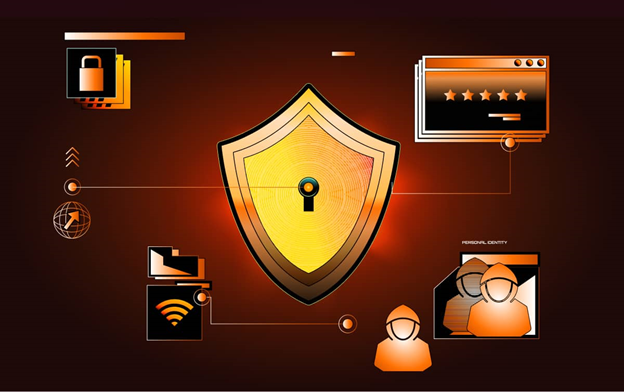
Costs associated with cybersecurity services for small firms typically begin at a few hundred dollars each month for essential security and range up to several thousand dollars for comprehensive services like managed detection and response. In this case, the ideal offer encompasses the measurable SLAs that specify the timelines for security alerts and incident escalation and containment assistance, service uptime, reporting, and recovery obligations.
-
1. Budget roughly $50–$200+ per user/month for managed cybersecurity, depending on scope.
-
2. Prioritise endpoint security, MFA, email protection, backups, patching, vulnerability management, and monitoring.
-
3. Businesses with sensitive data should consider 24/7 MDR or SOC coverage.
-
4. Require written SLAs for critical incident response.
-
5. Do not confuse an alert-response SLA with a guaranteed incident-resolution time.
-
6. Check exclusions, onboarding charges, tool licenses, retention periods, and incident-response fees before signing.
What Are Cybersecurity Services for Small Businesses?
Cybersecurity services for small companies include security services meant to avoid, identify, react to, and recover from cyber incidents.
Definition: Managed forms of cybersecurity refer to transferring all or some of the security processes to an MSSP or an MDR vendor as opposed to developing all capabilities internally.
According to NIST, cybersecurity risk management should consist of six main functions: Govern, Identify, Protect, Detect, Respond, and Recover. This helps the organisation verify that the service provider covers the whole security process.
Core Security Scope
The security software for small and medium-sized businesses must include protection for their identities, devices, data, cloud services, and operations.
Some typical services offered are as follows:
-
1. Endpoint Detection and Response
-
2. Antivirus and anti-malware software
-
3. Managed Detection and Response
-
4. Security Information and Event Management or Security Operations Centre monitoring
-
5. Protection against email phishing
-
6. Multi-factor authentication
-
7. Identification management and access control
-
8. Vulnerability scanning
-
9. Patch management
-
10. Firewall and network protection
-
11. Cloud security monitoring
-
12. Backup and recovery monitoring
-
13. Security awareness training
-
14. Incident response
-
15. Security reports and advisories delivered monthly
CISA and FTC recommend the use of MFA and software updates along with backup, employee training, access control, and response plans for those businesses.
Why Small Businesses Need More Than Antivirus
In contemporary cyber attacks, conventional antivirus strategies are not always effective, since they may be bypassed by a variety of means, including computer vulnerabilities, identity theft, hacking into cloud accounts, or even making legitimate use of administrative tools. According to Verizon in its 2026 Data Breach Investigations Report, the origin of as many as 31% of breaches should be attributed to software vulnerabilities, while in 48% of breaches ransomware is involved.
Thus, an effective security program should include mechanisms for remediation of vulnerabilities, identity management controls, continuous threat detection, proper backup systems and documented response plans.
Cost of Cybersecurity Services for Small Business
Typically, businesses should plan their budget based on users, devices, the probability of risk or threat, hours of the service, and regulatory obligations instead of looking for a unified price for cybersecurity services.
Recent 2026 managed security benchmarks indicate that service rates are estimated to be within the range of $50-$200 per user monthly, while more sophisticated solutions may charge $2,000-$15,000 monthly. Note: this should be viewed as an approximation rather than a fixed industry rate.
|
Service Level |
Indicative Monthly Cost |
Typical Scope |
|
Basic Protection |
$500–$1,500 |
AV/EDR, patch monitoring, MFA, basic reporting |
|
Managed Security |
$1,500–$5,000 |
EDR, email security, vulnerability management, monitoring |
|
MDR / SOC |
$3,000–$10,000+ |
24/7 monitoring, investigation, threat hunting, response |
|
Compliance-Heavy |
$5,000–$15,000+ |
SOC/MDR plus compliance, audits, governance and reporting |
Note: Actual quotations can differ significantly by location, employee count, endpoints, applications, infrastructure, and contract terms.
What are the reasons behind Higher Cybersecurity Cost?
Expenses go up when companies monitor more assets, react quickly, or meet stricter regulations. The major pricing factors are the following:
-
1. Size of the number of employees and endpoints
-
2. Servers and cloud workloads
-
3. The use of Microsoft 365 or Google Workspace
-
4. Monitoring around the clock versus during business hours
-
5. The existing regulations and compliance needs
-
6. The volume and time of the SIEM logs
-
7. Incident response coverage
-
8. Frequency of vulnerability scanning
-
9. The training of employees
-
10. Reporting obligations and requirements
What Should a Cybersecurity SLA Include?
A cybersecurity SLA should define measurable provider responsibilities, response targets, escalation procedures, availability, reporting, and exclusions. NIST defines an SLA as a commitment covering responsibilities and expected performance, including reliability, response times, reporting, resolution, and termination requirements.
Recommended Incident SLA Targets
For a small business buying 24/7 monitoring, critical security events should receive attention within minutes rather than hours.
|
Priority |
Example |
Suggested Acknowledgment |
|
P1 Critical |
Active ransomware or confirmed breach |
15–30 minutes |
|
P2 High |
Malware or suspicious privileged access |
30–60 minutes |
|
P3 Medium |
Suspicious activity requiring investigation |
Within 4 business hours |
|
P4 Low |
Low-risk configuration or advisory |
Within 1 business day |
These are target benchmarks for procurement, introduced only for reference.
The SLA needs to contain:
-
1. Timeframe for acknowledging alerts.
-
2. Timeframe for starting the investigation.
-
3. Timeframe for escalation.
-
4. Parties responsible for containment measures.
-
5. Ways and means for informing the customer.
-
6. Overall service availability.
-
7. Frequency of reporting.
-
8. Parties responsible for provision of service on recovery.
How to Select Cybersecurity Services Step by Step
Instead of just implementing the first security solution chosen by an IT security provider, businesses should first look into what risks they are facing.
-
Inventory: Laptops, servers, cloud applications, accounts, data, and external entities must be recognised.
-
Identify critical risks: Recognise what can hurt company-wide if it becomes inaccessible, stolen, or encrypted.
-
Establish a security baseline: Introduce multi-factor authentication, endpoint security, backups, patching, email security, and staff training.
-
Determine monitoring requirements: Decide if only business-hours monitoring would be enough or whether 24/7 monitoring and detection and response capabilities should be used.
-
Specify SLA requirements: Determine the response and escalation time before signing off.
-
Compare providers: Take a look at coverage, equipment, knowledge, reporting, exclusions, and references.
-
Test the response plan: Do tabletop exercises and recovery tests regularly.
The CISA states that when a company wants to start or enhance its cybersecurity strategy, it should concentrate on a limited number of impactful practices at the beginning.
Benefits of Managed Cybersecurity
Managed cybersecurity gives small businesses access to security capabilities that can be difficult to staff internally.
Key benefits include:
-
1. Continuous threat monitoring
-
2. Faster detection and investigation
-
3. Access to cybersecurity specialists
-
4. Predictable monthly costs
-
5. Improved patch and vulnerability visibility
-
6. Better incident preparedness
-
7. Centralized reporting
-
8. Support for cyber insurance and compliance requirements
Limitations
While outsourcing security may lessen the operational burden, the full cyber risk remains with the business.
Some drawbacks are:
-
1. Possibilities of excluding remediation efforts in the contract.
-
2. Possible additional cost for monitoring at all times.
-
3. Some providers might just monitor the alarms but are unable to stop the threats.
-
4. Possible additional costs for incident-response retainer.
-
5. Compliance assistance does not mean compliance.
-
6. The business must have internal responsibility for risk and security decisions.
Common Mistakes
The biggest purchasing mistake is comparing providers only by monthly price.
Avoid:
-
1. Buying tools without monitoring
-
2. Assuming backups are automatically tested
-
3. Ignoring Microsoft 365 or cloud accounts
-
4. Accepting undefined response times
-
5. Skipping vulnerability management
-
6. Leaving privileged accounts without MFA
-
7. Failing to clarify incident-response costs
-
8. Choosing an MSSP without understanding contract exclusions
Best Practices and Expert Tips
The most effective SMB security programs pay close attention to a few carefully implemented controls, rather than using multiple devices and software with inappropriate setups.
Phishing-proof multi-factor authentication, software updates that perform automatically, protected backup systems, threat detection and response software, vulnerability management, and applying the principle of least privilege should be prioritised.
The important aspect is to have all your security vendors explain what they will do as soon as ransomware is identified.
Real-World Examples
1. 25-Person Professional Services Firm
A small office primarily using Microsoft 365 may not need an enterprise SIEM deployment. A sensible package could include EDR, MFA, email protection, vulnerability scanning, backup monitoring, security training, and managed alert response.
2. 100-Person Online Business
A company handling customer data and operating continuously needs stronger detection and recovery capabilities. Its scope may include 24/7 MDR, cloud monitoring, SIEM, vulnerability management, identity monitoring, incident response, penetration testing, and compliance reporting.
Mini Case Study
Take, for instance, a small business with 50 users that has a compromised admin account due to phishing. Without managed detection and response technology, the hacker could potentially maintain access until someone notices something unusual happening in the business. With an MDR solution, you can be alerted to compromised identities and immediately initiate an investigation, revoke sessions, isolate accounts, scan endpoints, reset passwords, and take other actions as per the SLA.
Key Takeaways
-
1. Cybersecurity services for small businesses should cover prevention, detection, response, and recovery.
-
2. Managed cybersecurity commonly costs $50–$200+ per user/month, depending on scope.
-
3. 24/7 MDR and compliance requirements significantly increase pricing.
-
4. Critical incidents should have clearly documented response SLAs.
-
5. MFA, EDR, backups, patching, vulnerability management, and security awareness should form the baseline.
-
6. Always review exclusions before comparing quotations.
People Also Ask / FAQs
1. How much does cybersecurity cost for a small business?
If you’re looking at managed security services, just know that the costs can vary from several hundred dollars to over $15,000 a month, depending on how many users and infrastructure, and compliance needs you have.
2. What cybersecurity services does a small business need?
Most SMBs need MFA, endpoint security, email security, backups, patching, vulnerability management, employee awareness and incident response.
3. What is an MSSP?
A Managed Security Service Provider utilises its customers’ security technology and processes on their behalf.
4. What is MDR?
Managed Detection and Response merges technology with specialists that investigate and respond to incidents.
5. Do small businesses need a 24/7 SOC?
Companies that rely heavily on uptime, sensitive information, compliance, or e-commerce can benefit from 24/7 monitoring.
6. What is a cybersecurity SLA?
A cybersecurity SLA specifies service responsibilities, expected performance, response times, reporting, escalation, and related obligations.
7. Is antivirus enough for a small business?
No. Modern cybersecurity also requires identity protection, vulnerability management, patching, backups, email security, monitoring, and incident response.
8. How often should cybersecurity be reviewed?
Security posture should be monitored continuously, while formal risk, access, recovery, and vendor reviews should occur periodically and whenever major business or technology changes happen.
Conclusion
When it comes to small business cybersecurity, it’s important to approach the purchase as a business-risk service instead of simply as a collection of security tools. Start with the basics in security, determine your major risks, put in place monitoring according to your specific needs, and require measurable response speed. Your provider should be able to tell you exactly what it covers, how it works during a breach, how quickly its team acts, and which functions your company is responsible for.

Anshul Goyal
Group BDM at B M Infotrade | 11+ years Experience | Business Consultancy | Providing solutions in Cyber Security, Data Analytics, Cloud Computing, Digitization, Data and AI | IT Sales Leader