
Managed Cloud Services for SMEs: 7 Packages That Reduce IT Overhead
Discover 7 tailored managed cloud service packages designed to eliminate server maintenance, scale resources seamlessly, and cut IT overhead for small and medium-sized enterprises (SMEs).
03
Sep
Managed Cloud Services for SMEs: 7 Packages That Reduce IT Overhead
Published 03 Sep 2026 Updated 03 Sep 2026 Written and reviewed by Anshul Goyal
Table of Contents
- The Necessity of Managed Cloud Services for SMEs
- The Key Components of Managed Cloud Services
- Traditional Method vs. Managed Cloud Solution
- 7 Managed Cloud Service Packages for SMEs
- 1. Cloud Assessment Package
- 2. Managed Infrastructure Package
- 3. Monitoring and Incident Response Package
- 4. Backup and Disaster Recovery Package
- 5. Cloud Security and Compliance Package
- 6. Cloud Cost Optimisation Package
- 7. DevOps and Modernisation Package
- Implementation Roadmap
- Business Benefits for SMEs
- Conclusion
- FAQs
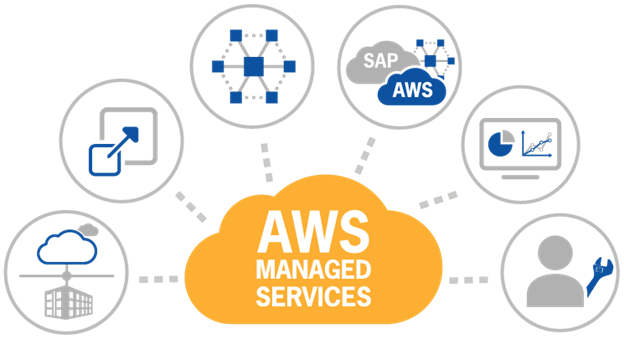
Managed cloud services enable SMEs to partner with IT experts to handle cloud infrastructure, monitoring, security, and backup management, as well as compliance and cost optimisation. This partnership takes the burden off the SME’s internal IT departments, while also improving service uptime, security, and predictability of cloud operations, alleviating the need to hire additional full-time staff.
The Necessity of Managed Cloud Services for SMEs
The migration of SMEs to cloud computing helps these businesses function faster and more flexibly with access to systems and data remotely. The trade-off to cloud-based systems is the need for constant monitoring and patching, security checks, backup verification, and management of costs.
Custom cloud computing solutions and services provided by our technical team help alleviate the issues with the overloaded internal IT staff of SMEs. Managed cloud services provide on-demand support and access to cloud computing and security personnel.
The result for CTOs and IT managers is more focus on strategic initiatives of the business and less time spent on mundane and repetitive activities.
The Key Components of Managed Cloud Services
Reliable managed cloud services provision should adhere to widely accepted cloud and security standards. Some of these are:
-
1. AWS Well-Architected Framework
-
2. Microsoft Cloud Adoption Framework
-
3. NIST Cybersecurity Framework
-
4. ISO/IEC 27001
-
5. CIS Controls
These components assist in building a cloud-based system with security and scalability that is compliance aware.
Traditional Method vs. Managed Cloud Solution
|
Aspect |
Traditional Method |
Managed Cloud Solution |
|
Infrastructure |
Set up manually and fixed reactively |
Standardised cloud management |
|
Monitoring |
Most issues are found after downtime |
Proactive monitoring around the clock |
|
Security |
Only basic access restrictions |
MFA, logging, hardening, and regular reviews |
|
Backup |
Backup is offered but seldom tested |
Backup and restoration are regularly tested |
|
Cost |
Costs are checked only after overspending |
Monthly cost optimisation |
|
Support |
Everything is handled by the internal team |
Expert cloud support and escalation |
7 Managed Cloud Service Packages for SMEs
1. Cloud Assessment Package
This is a review of the set-up and support for cloud services, risk, security, and performance, as well as costs per month. It offers a road map for SMEs for further improvements.
2. Managed Infrastructure Package
This covers cloud services, storage, and networking, as well as patching, control of access, and performance. It improves the infrastructure and workloads of the internal IT team.
3. Monitoring and Incident Response Package
This package monitors services and provides support for alerts and incidents, as well as response and escalation. This package will prevent issues from impacting users.
4. Backup and Disaster Recovery Package
This package secures business data with backup services, recovery testing and disaster recovery planning.
5. Cloud Security and Compliance Package
This package is for cloud services security and compliance and covers MFA, identity review, audits and assessments of security and compliance for cloud services, protective measures, and tracing.
6. Cloud Cost Optimisation Package
This package provides support to cloud cost management through optimisation of cloud resources, budgets, storage, tagging, and monthly cloud service reports.
7. DevOps and Modernisation Package
This package provides support for SMEs in evolving the delivery of cloud services through the implementation and optimisation of cloud services with Infrastructure as Code and DevOps cloud services automation.
Implementation Roadmap
-
1. SMEs should keep a few steps in mind when looking at cloud maturity:
-
2. Recognise the existing workloads, users, expenses, and risks.
-
3. Establish security, backups, monitoring, and access control.
-
4. Adjust for efficiency concerning costs, available storage, and the cloud.
-
5. Establish policies around security, backups, compliance, and change management.
-
6. Grow with automation, DevOps, and architecture that is adaptable for the future.
Business Benefits for SMEs
SMEs benefit from the increased uptime and improved security of managed cloud services, along with more predictable costs and quicker responses. All this can happen without the need to hire additional members of their IT team.
Businesses with managed cloud services can be more strategically positioned to handle audits, cyber threats, and remote work, along with a growing application base and future digital transformation.
Conclusion
Using managed cloud services, SMEs can operate secure and dependable cloud environments without stretching their budget. The correct services allow firms to begin with only assessment and later expand to cover management of infrastructure, security, backups, cost control, and DevOps.
For CTOs, IT managers, and business leaders, this results in less of a burden and a more manageable cloud that can be developed over time.
Consult our cloud service engineers to look at how your business can benefit from the offered managed cloud services. For more details about the service, please refer to our Managed Cloud Services.
FAQs
1. What are managed cloud services?
Managed cloud services are the outsourced support services for cloud infrastructure, security, backups, monitoring, and cost control.
2. How do they cut overhead IT costs?
By minimising day-to-day IT work, including monitoring, patching, backup checks, access reviews, and troubleshooting in cloud computing.
3. Are managed cloud services beneficial for SMEs?
Yes. Managed cloud services give SMEs cloud support that eliminates the need for an extensive internal IT department.
4. What should SMEs begin with?
SMEs should begin with cloud assessment packages.
5. Do managed cloud services bring down expenses?
Yes. Cost optimisation reduces unnecessary resources, things that are not used, and unnecessary expenses related to the cloud.
Anshul Goyal
Group BDM at B M Infotrade | 11+ years Experience | Business Consultancy | Providing solutions in Cyber Security, Data Analytics, Cloud Computing, Digitization, Data and AI | IT Sales Leader