
GCP to AWS Migration services in india
BM Infotrade offers professional GCP to AWS migration services in India, helping businesses securely move workloads, applications, databases, and infrastructure to Amazon Web Services with minimal downtime. Our experts ensure a smooth migration, improved performance, enhanced security, and optimized cloud costs.
15
Jul
GCP to AWS Migration services in india
Published 15 Jul 2026 Updated 22 Jul 2026 Written and reviewed by Anshul Goyal
Table of Contents
- Why Indian Businesses Are Migrating from GCP to AWS
- What Are GCP to AWS Migration Services?
- Why AWS Is Becoming the Preferred Choice for Enterprises
- Improved Security & Compliance Frameworks
- Common Challenges Businesses Face During GCP to AWS Migration
- GCP to AWS Migration Architecture
- Step-by-Step GCP to AWS Migration Process
- Migration Strategy Planning
- Future-Proofing Businesses with AWS Cloud Infrastructure
- Why Businesses Prefer Professional GCP to AWS Migration Services in India
- GCP to AWS Migration Success Checklist
- Why Strategic Cloud Migration Matters in 2026
- Conclusion
- FAQs
GCP to AWS migration services help businesses move workloads, applications, databases, and cloud infrastructure from Google Cloud Platform to Amazon Web Services with improved scalability, stronger enterprise ecosystem support, better compliance flexibility, and long-term infrastructure cost optimisation for growing businesses in India.
Why Indian Businesses Are Migrating from GCP to AWS
Across India today, companies are looking further into their cloud infrastructure strategy. For a variety of reasons, including Google Cloud Platform's strong analytics and AI capabilities, more businesses are starting to move from GCP to Amazon Web Services. Some of the key themes we are seeing from businesses migrating from GCP to AWS include:
• Reducing cloud operational costs
• Increasing the flexibility of their infrastructure
• Improving disaster recovery architecture
• Increasing the scalability of workloads
• Increasing security controls for their enterprise
• More access to third-party integrations
• Creating multiple regions for deployment
For businesses in India with a high volume of visitors, sensitive customer or employee data, or enterprise applications, AWS typically offers more long-term flexibility in their cloud infrastructure than GCP.
What Are GCP to AWS Migration Services?
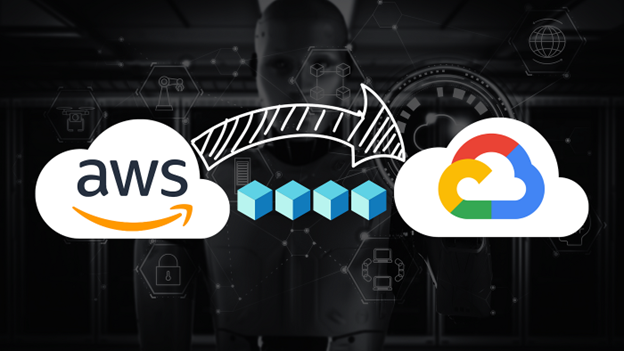
GCP to AWS Migration Services include transferring all workload types, applications, database systems, storage systems, container systems, network configurations, and DevOps environments from the Google Cloud Platform (GCP) to Amazon Web Services (AWS).
These services generally include the following:
• Conducting an assessment of the existing cloud infrastructure.
• Creating a migration strategy to plan how to migrate to AWS.
• Migrating databases.
• Modernising applications.
• Migrating containers.
• Redesigning security architecture.
• Looking for ways to optimise costs for future workloads.
• Providing ongoing post-migration monitoring.
• Implementing disaster recovery.
• Restructuring DevOps and CI/CD
While the purpose of migration is to provide a solution for moving data, GCP to AWS Migration will build a better Scaleable and Secure Cloud Ecosystem for the future.
Why AWS Is Becoming the Preferred Choice for Enterprises
Enterprise Ecosystem Advantage
AWS is considered one of the biggest enterprise cloud ecosystems in the world. Organisations have access to many features within this platform as they relate to:
• Serverless Computing
• Kubernetes and Containers
• Edge Computing
• IoT Infrastructure
• Global CDN Networks
According to examples found through case studies, it appears as though several enterprise customers running really big applications prefer using AWS because of its fully developed infrastructure management capabilities and a larger set of services available (more than any competing organisation).
Better Scalability for High-Growth Businesses
During campaigns, discounts on sales days, and big seasonal holidays, many Indian startups and digital platforms see huge spikes in user activity.
AWS Offers:
• Auto Scaling Groups
• Elastic Load Balancers
• Multiple Availability Zones
• Elastic Kubernetes Service (EKS)
• Highly Available Architecture (HA)
All of this helps your business continue to operate at optimal levels with less strain on your infrastructure.
Improved Security & Compliance Frameworks
The main reason companies are looking to migrate their data from on-premises to the cloud is due to security.
AWS has strong security controls in place that meet best practice standards and are in accordance with international standards.
Important Technical Entities Integrated in Enterprise Migration
As part of creating a foundation for Digital Identity, Trust in Institutions, and strengthening the bonds between institutions and their users, many companies' migration strategies are built around the following organisations:
• AWS
• Kubernetes
• ISO 27001
• SOC 2 Compliant
• Zero-Trust Security Architecture
These organisations provide businesses with authoritative technical validation, a readiness to be compliant with regulatory requirements, and an ability to operate at all times on an enterprise-class level.
Common Challenges Businesses Face During GCP to AWS Migration
Application Downtime Risks
A badly planned migration can impact business operations and customer experience.
Some of the common issues encountered are:
• Service interruptions
• Failing APIs
• Failed integrations
• Database latency
• Delays in DNS propagation
From the engineering point of view, phased migration and rollback architecture become extremely vital.
Data Transfer Complexity
Many enterprise applications and large-scale databases have quality issues due to their:
• Structured Data
• Unstructured Storage
• Real-Time Pipelines
• Multi-Regional Replication
• Containerized Workloads
Migrating these systems can create problems with bad architecture, which means the migrated system could have data inconsistency.
Cloud Cost Mismanagement
One significant challenge for companies after migrating is unplanned increases in their cost.
Without being optimised for AWS, most companies will tend to provision too many other resources, leading to additional operational costs beyond what is needed for their business.
Thus, cloud cost governance is a critical part of any migration service.
GCP to AWS Migration Architecture
Traditional Migration vs Modern Cloud Migration Approach
|
Traditional Method |
Our IT Solution |
|
Lift-and-shift without optimisation |
Cloud-native migration architecture |
|
Minimal security redesign |
|
|
Manual workload migration |
Automated migration orchestration |
|
Limited disaster recovery |
Multi-region backup architecture |
|
Downtime-heavy migration |
Near-zero downtime migration |
|
Reactive monitoring |
|
|
Basic scaling setup |
Elastic auto-scaling infrastructure |
Step-by-Step GCP to AWS Migration Process
Infrastructure Assessment
The migration process begins with an in-depth exploration of the infrastructure.
This will include reviewing each of the following areas:
• Compute Workloads
• Virtual Machines
• Databases
• APIs
• Network Layers
• Kubernetes Clusters
• Storage Dependencies
• Security Policies
From extensive experience, our Technical team has concluded that proper mapping of dependencies results in a considerable reduction in the risk of migration failure.
Migration Strategy Planning
Different organisations need different migration strategies.
Common Migration Models
Rehosting: Moving workloads to the cloud with no significant changes.
Replatforming: Making minor improvements while keeping the basic structure of the application intact.
Refactoring: Redefining the application by using cloud-based AWS services.
Data & Database Migration
Database migration can include:
Database synchronisation and validation are essential to preserving the integrity of the data involved with the implementation of the new database.
Application Modernisation
Additionally, today, many database migrations include:
• Docker Containerized
• Kubernetes Orchestrated
• Microservices Transformed
• Serverless Deployed
• API Gateway Integrated
These will help businesses ensure that their applications are built for scalability long after the original migration process has been completed successfully.
Security Hardening
A good example of the security allowed in these configurations would include:
• Redesigning IAM Policies
• Implementing Encryption
• Creating Network Segmentation
• Setting Up Threat Detection Systems
• Providing Identity Access Governance
• Providing Multi-Factor Authentication
Future-Proofing Businesses with AWS Cloud Infrastructure
AI & Automation Readiness
The security architecture is also redesigned in accordance with compliance requirements for the company.
Some of the complete capabilities that AWS can provide include:
• Deployment of Artificial Intelligence Models
• Predictive Analytics
• Machine Learning Workflows
• Business Intelligence Systems
• Automation Pipelines
This capability allows for a scalable level of innovativeness for the business without needing to recreate new infrastructure later.
Disaster Recovery & Business Continuity
Long downtime periods are unacceptable for today's businesses.
Typical AWS migration methods include:
• Backup Automation
• Multi-Zone Redundancy
• Failover for Disaster Recovery
• Live Monitoring
• Infrastructure Replication
Case studies indicate that businesses with multiple-region AWS deployments have much higher levels of operational resilience than those with single-region environments.
Why Businesses Prefer Professional GCP to AWS Migration Services in India
More and more Indian companies are turning to professional partners for migration services, as a mistake in migrating would affect:
• Revenue
• Customer Trust
• Security Profile
• Compliance Status
• Business Continuity
A professionally trained migration partner will allow an organisation to:
• Minimise Downtime
• Minimise Migration Risks
• Improve Performance
• Optimise Cloud Costs
• Strengthen Cybersecurity
• Build a Scalable Cloud Infrastructure
GCP to AWS Migration Success Checklist
Technical & Business Checklist
• Completed Cloud Infrastructure Assessment
• Documented Dependencies
• Reviewed Existing Security Architecture
• Prepared Backup and Rollback Strategy
• Validated Database Replication
• Approved Downtime Reduction Strategy
• Implemented AWS Cost Optimisation Frameworks
• Configured Monitoring and Observability
• Tested Disaster Recovery
• Verified Compliance Controls
Why Strategic Cloud Migration Matters in 2026
The cloud migration process involves decisions that are significantly more than "just" an IT-based decision. It provides direct impacts to business scalability, operational resilience, cybersecurity readiness, as well as to a company's long-term digital transformation strategy.
From a solution architecture perspective, a company gains significant competitive advantages through modernised, cloud-based infrastructures, including:
• Performance
• Security
• Automation
• Scalability
• AI Adoption
• Operational Efficiency
An investment in the AWS cloud is also evolving into an enterprise-level investment as Indian enterprises continue to prepare for expanding their digital business long-term.
Conclusion
Migrating to AWS from GCP gives businesses the ability to create cloud environments that are built for further growth and security and are ready for future changes. In cases where your objective is to improve cost-effectiveness, upgrade your infrastructure, enhance its security, or allow for increased enterprise growth, implementing a successful AWS migration strategy will significantly improve your overall operations on an ongoing basis.
With the experience and expertise of our engineering team, migrating is best seen as a planned transformation project rather than just moving a workload to another platform. By creating an appropriate path for migration, you can limit any associated risk with this type of project, enhance compliance with regulatory requirements, and develop all benefits associated with cloud-native infrastructures.
FAQs
1. What is GCP to AWS migration?
Moving data, programs, and workloads from a Google Cloud Platform instance to Amazon Web Services (AWS) is known as migrating to AWS Infrastructure. AWS provides businesses with greater scale, enhanced security, and improved cloud administration capabilities than GCP.
2. Why are businesses in India migrating from GCP to AWS?
Many businesses in India choose AWS because it has a larger ecosystem of large enterprises, much greater scalability than GCP, more robust support for regulatory compliance, more efficient worldwide infrastructure, and many more third-party integrations than GCP.
3. How long does the GCP to AWS migration take?
The length of time needed to migrate data depends on the complexity of the infrastructure to be migrated, the size of the applications being migrated, the volume of data to be migrated (number of databases), and the level of security required during the migration. Small migrations generally take 3-4 weeks to complete, while enterprise migrations may take 6+ months.
4. Is there downtime during cloud migration?
Professional migration best practices include phased approach migration deployment to limit downtime, data replication, backup systems, and rollback procedures and plans to ensure data is kept intact during the entire process.
5. What services are included in the GCP to AWS migration?
The types of services available for GCP to AWS are typically an assessment of the current infrastructure, an architectural plan for the new cloud platform, database migration, application modernisation, security implementation, DevOps set-up, monitoring and cost effectiveness.

Anshul Goyal
Group BDM at B M Infotrade | 11+ years Experience | Business Consultancy | Providing solutions in Cyber Security, Data Analytics, Cloud Computing, Digitization, Data and AI | IT Sales Leader