
Cloud Migration Services in India: Pricing, Timeline, and How to Choose the Right Partner
Explore cloud migration services in India, including pricing, timelines, migration strategies, and key factors to consider when choosing the right cloud migration partner for your business.
07
Sep
Cloud Migration Services in India: Pricing, Timeline, and How to Choose the Right Partner
Published 07 Sep 2026 Updated 07 Sep 2026 Written and reviewed by Anshul Goyal
Table of Contents
The estimated cost of cloud migrations services in India range between ₹ 1.5 lakh – ₹ 50 lakh +, depending mostly on the workload, application complexity and security and downtime requirements of the target cloud platform. Smaller migrations typically take between 2 – 6 weeks, while larger migrations typically take 3 – 9 months. The ideal partner will encompass all elements of cloud migration from assessment and architecture to migration, security, testing and all post migration services.
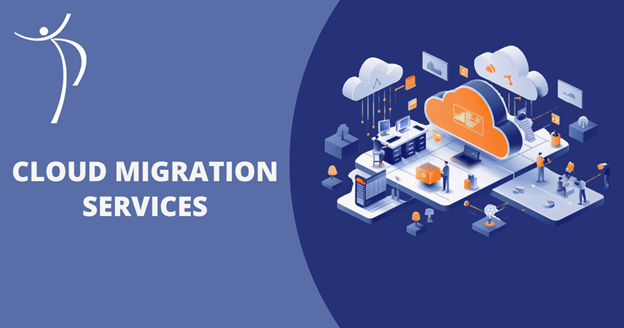
Why Cloud Migration Matters for Indian Businesses
The costs associated with scaling on legacy infrastructure, as well as securing and maintaining that infrastructure, have driven Indian businesses to the cloud. For most CTOs and IT Managers, the challenges of maintaining legacy infrastructure have been downtime, cyber risks and compliance, but also very slow and unpredictable costs.
Cloud Migration Pricing in India
|
Migration Type |
Best For |
Estimated Cost |
Timeline |
|
Basic Migration |
Websites, small apps, 2–5 servers |
₹1.5 lakh – ₹5 lakh |
2–6 weeks |
|
SME Migration |
ERP, CRM, databases, 5–15 servers |
₹5 lakh – ₹15 lakh |
6–12 weeks |
|
Mid-Level Migration |
Multiple apps, VPN, DR, monitoring |
₹15 lakh – ₹35 lakh |
3–6 months |
|
Enterprise Migration |
Complex apps, compliance, multi-cloud |
₹35 lakh – ₹1 crore+ |
6–9 months |
All cloud costs components of storage, compute, bandwidth, databases, backups and managed services are additional.
What Influences Cloud Migration Costs?
Cloud migration costs generally depend on the strategy adopted, the complexity of the application, the amount of data to be migrated, the security of the data being migrated, the level of acceptable downtime, and the available post-migration support. For example, a lift-and-shift migration would be cheaper than a migration involving modernization of the application, automation of the DevOps, and a migration requiring no downtime, since the latter would involve more engineering effort.
From an implementation perspective, companies should at least complete a cloud readiness assessment to determine the final migration budget.
Our IT Solution vs. the Traditional Method
|
Aspect |
The Traditional Method |
Our IT Solution |
|
Infrastructure |
Fixed physical servers |
Scalable setups of AWS, Azure, or Google Cloud |
|
Security |
Basic firewall protection |
IAM, encryption, logging, and access control |
|
Backup |
Manual or periodic backups |
Automated backup and recovery planning |
|
Deployment |
Manual release process |
CI/CD and deployment automation |
|
Monitoring |
Reactive issue handling |
Proactive alerts and dashboards |
|
Cost |
High hardware investments |
Cost-efficient pay-as-you-go model |
Key Technical Entities We Align With
For a successful cloud migration strategy, the following need to be incorporated as part of the migration:
-
1. Scalable AWS cloud infrastructures and migration services.
-
2. Microsoft Azure for enterprise workloads along with Microsoft 365 and Windows.
-
3. Google Cloud for analytics along with AI and Kubernetes cloud-native services.
-
4. ISO/IEC 27001:2022 for information security governance.
-
5. Kubernetes and CIS Benchmarks for secure containerized deployments.
Trust, digital authority, and long-term cloud reliability can be achieved by aligning with these entities.
Cloud Migration Strategy
1. Assessment
Identify the applications, the servers, databases, and the business-critical workloads along with their security and other dependencies.
2. Design of Architecture
Cloud architecture should include design for networks, IAM, backups, monitoring, security, compliance, and disaster recovery along with design for cloud migration.
3. Pilot Migration
Less critical workloads are migrated first to test backup, rollback, access, and performance processes.
4. Production Migration
Workloads that pose a higher business risk are migrated in controlled, monitored, and tested batches with planned outages.
5. Optimization
The cloud infrastructure and environment should be optimized post-migration for cost, performance, security, and availability.
Conclusion
Indian cloud migration services help organizations reduce their reliance on on-premise infrastructure, improve business agility and cloud security, and accelerate digital transformation. The benefits are highest with thorough scoping and designing for security, stepwise migration, and post-migration optimization.
Are you considering a business move to the cloud? Get a migration readiness assessment with a cost and implementation scope by our experts. "Book a consultation now."
FAQs
1. What is a cloud migration?
Moving data, apps, and workloads from on-premise tools to a cloud service (AWS, Azure, Google Cloud, etc.) is called a cloud migration.
2. How much does cloud migration cost in India?
Cloud migration in India costs anywhere between ₹1.5 lakh and ₹50 lakh+. Prices depend on how big workloads and apps are and what security and migration needs are involved.
3. How long does cloud migration take?
A cloud migration of a small company can take between 2 and 6 weeks. A medium company can take between 3 and 6 months. A large enterprise can take between 6 and 9 months or even longer.
4. Which of the cloud platforms is most preferred?
All 3 of the platforms (AWS, Azure, and Google Cloud) are excellent. The most relevant platform will depend on your apps and integrations, your budget and compliance, and your business roadmap.
5. Why do businesses need a cloud migration partner?
Cloud migration partners can help you with a lot of things from evaluation to design and migration to security and spend optimization.

Anshul Goyal
Group BDM at B M Infotrade | 11+ years Experience | Business Consultancy | Providing solutions in Cyber Security, Data Analytics, Cloud Computing, Digitization, Data and AI | IT Sales Leader