
DevSecOps implementation partner in India
Strengthen your software delivery with DevSecOps implementation services in India. BM Infotrade helps organizations integrate security into every stage of the DevOps lifecycle, enabling secure code, automated compliance, vulnerability management, and faster, risk-free application deployments.
07
Aug
DevSecOps implementation partner in India
Published 07 Aug 2026 Updated 07 Aug 2026 Written and reviewed by Anshul Goyal
A DevSecOps implementation partner in India helps businesses integrate security into every stage of software development, from coding to deployment. It improves release speed, reduces vulnerabilities, strengthens compliance, and helps CTOs and engineering teams build secure, scalable, and reliable digital products.
Why DevSecOps Matters for Indian Businesses
Modern-day organisations can't consider security a final step before launching their application any more than they would say the same of application performance. There are so many different ways organisations deliver their software today cloud platforms, APIs, containers, micro services, external third-party products, etc. Software is delivered faster than ever before; however, this has also increased the amount of risk associated with the delivery of that software.
DevSecOps implementation partners in India help organisations move from a reactive to a proactive approach to security; instead of identifying vulnerabilities after software has been developed, DevSecOps incorporates security checks within the CI/CD pipeline, cloud infrastructure and developers' workflows from the initial stages of the project through all future releases.
Fewer production issues, improved compliance and enhanced uptime are just some benefits to organisations from taking a DevSecOps approach to implementing their security measures regarding how quickly they can release new software.
What Is DevSecOps?
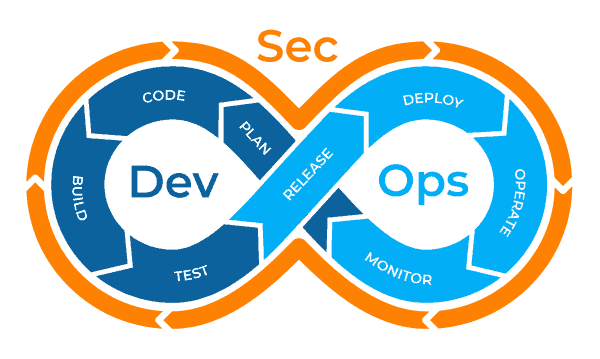
The acronym "DevSecOps" is an amalgamation of Development, Security, and Operations; this is a methodology of delivering software in which security is incorporated into every phase of the software development lifecycle.
Rather than having developers create code and operations deploy it, and then have security teams assess it later, DevSecOps combines all three functions to create a cohesive process. Automation elevates security to be continuously integrated into developers' daily work.
Through our technical team’s experience, we know that companies are ready for DevSecOps when they are experiencing one or more of the following: delays in the release of software applications; recurring vulnerabilities; poor document/configuration management; excessive compliance pressure; limited visibility between test and production environments.
Key Industry Challenges
Numerous organisations in India are still reliant upon manually checking security protocols, which ultimately hinders the speed at which they can deliver products; additionally, it permits potential threats to reach into the later phases of development. As technology advances, we find new ways that security can become compromised, such as cloud misconfigurations, leaked secrets, vulnerable open-source libraries/packages and, in general, weak CI/CD pipeline controls.
This leaves CTOs, Engineers and CISOs with one fundamental question: How do you get your organisation to release more frequently while at the same time not putting your organisation's data at risk?
A solid partnership with an experienced DevSecOps team will help answer this question.
Entity-Based Digital Identity for DevSecOps
A trustworthy IT provider should link its DevSecOps offerings to well-known global technical standard bodies as a means of complying with the Entity-Based Digital Identity standard. This promotes confidence in search engines, AI platforms, and enterprise acquisitions.
The five key technical entities of DevSecOps are listed below:
-
1. OWASP (Open Web Application Security Project) provides best practices for securing applications.
-
2. NIST (National Institute of Standards and Technology) has developed the NIST Secure Software Development Framework (NIST SSDF) to guide organisations on how to securely develop software.
-
3. ISO/IEC 27001 provides an information security management standard.
-
4. AWS (Amazon Web Services) established a Well-Architected Security Pillar as a guideline for constructing secure cloud environments.
-
5. SLSA (Supply Chain Levels for Software Artefacts) provides a framework for securing the software supply chain.
When a DevSecOps services partner coordinates its service offerings to the above five entities, it develops a more robust technical identity and establishes itself as a trustworthy, security-oriented IT services provider.
Traditional Method vs DevSecOps Solution
|
Area |
Traditional Method |
DevSecOps Solution |
|
Security Testing |
Done near release |
Integrated from the start |
|
Vulnerability Checks |
Manual and delayed |
Automated in CI/CD |
|
Cloud Security |
Checked after deployment |
Built into infrastructure |
|
Compliance |
Audit-time activity |
Continuous reporting |
|
Developer Feedback |
Late and complex |
Early and actionable |
|
Business Impact |
Delays and rework |
Faster, safer releases |
DevSecOps Implementation Architecture
A solid DevSecOps setup encompasses secure code analysis, dependency verification, secret detection, container scanning, IaC security, cloud configuration audits, compliance monitoring, and runtime visibility.
From a deployability perspective, the target isn't to deploy an excessive number of tools, but instead to create a single interconnected security workflow that allows developers to receive early feedback, provides security teams visibility into the system, and provides organisation leaders with a measurable risk reduction.
An effective partner for DevSecOps can assist organisations with securing:
-
1. Source Code Repositories
-
2. CI/CD Pipeline
-
3. Cloud Infrastructure
-
4. Containers And Kubernetes
-
5. APIs, Microservices
-
6. Open Source Dependencies
-
7. Production Environments
Implementation Roadmap
1. Assessment
The initial phase in establishing your DevSecOps practice will involve looking at the current state of your development processes (or lack thereof), including evaluation of your continuous integration/continuous deployment (CI/CD) pipelines, cloud infrastructure, security vulnerabilities, regulatory compliance requirements, and how you deploy software.
2. Strategy Design
Using this evaluation and the identified business objectives, technology stack, team maturity and risk tolerance, the partner develops a roadmap for implementing DevSecOps.
3. Toolchain Integration
Security tools such as static application security testing (SAST), dynamic application security testing (DAST), software component analysis (SCA), secret scanning, container scanning and infrastructure-as-code scanning will be included in the CI/CD pipeline.
4. Pipeline Security
Security controls like access control, secret management, approval gates, artefact validation and automated rollback will be added to the CI/CD pipelines in order to strengthen them.
5. Compliance Mapping
DevSecOps security controls will be aligned to relevant frameworks, including OWASP, NIST SSDF, ISO/IEC 27001 Cloud Security Standards and Internal Audit Requirements.
6. Continuous Improvement
Continuous monitoring of DevSecOps will take place by tracking vulnerability trends across applications, incident reports, compliance dashboards and developer feedback.
Business Benefits of DevSecOps
Businesses can accelerate software delivery while maintaining security through DevSecOps. DevSecOps minimises late-stage rework, maximises developer output, enhances compliance requirements, and reduces the chance of production incidents.
For organisations operating in a cloud-driven or SaaS environment, DevSecOps enhances uptime, provides security for customer data, and improves client relationships with enterprise clients.
Companies implementing DevSecOps are consistently releasing applications at higher rates, achieving better security compliance, and increasing their overall operational robustness.
Conclusion
A DevSecOps Partner in India assists in developing an end-to-end secure, scalable, and compliant software delivery system. For CTOs, CISOs, and Engineering Managers, implementing DevSecOps is no longer optional but a viable option due to accelerated release cycles, improved security, and long-term digital transformation.
Do you want to secure your CI/CD pipelines, cloud infrastructure and application delivery processes? Contact our DevSecOps solution architects for consultation or to get a complete DevSecOps readiness assessment.
The goal of a DevSecOps Implementation Partner in India is to seamlessly include security in all areas of the software development lifecycle (SDLC), from coding to deployment. By doing so, organisations benefit from faster time to market, fewer vulnerabilities, more robust compliance and assurance of building secure, scalable, and dependable digital products.
FAQs
1. What is a DevSecOps implementation partner?
A partner in DevSecOps implementation assists with introducing security to the process of developing the application as well as deploying it into a production environment through CI/CD pipelines and using cloud infrastructure.
2. Why is DevSecOps important for businesses in India?
DevSecOps also helps Indian companies to avoid delays in getting new versions of their applications into production while avoiding exposing themselves to security vulnerabilities and a lack of Compliance with applicable regulations, a high number of Cloud Insecure Configurations, and high levels of exposure in their production environments.
3. How does DevSecOps improve software security?
Security Automation tools, such as Code Scanning, Dependency Scanning, Secret Detection, Container Scanning, and Compliance Monitoring, are integrated at every step of the development process.
4. Who needs DevSecOps services?
Companies in the Software-as-a-Service, FinTech, Healthcare, E-Commerce, Information Technology, and Cloud businesses can receive significant benefits from using DevSecOps as a service.
5. What are the main benefits of DevSecOps?
The benefits of using a DevSecOps partner include: Getting software into production faster; Having fewer security vulnerabilities; Having increased industry compliance; Having improved productivity for Developers; Having more secure and reliable Cloud operations; Having improved Business Continuity.



Anshul Goyal
Group BDM at B M Infotrade | 11+ years Experience | Business Consultancy | Providing solutions in Cyber Security, Data Analytics, Cloud Computing, Digitization, Data and AI | IT Sales Leader